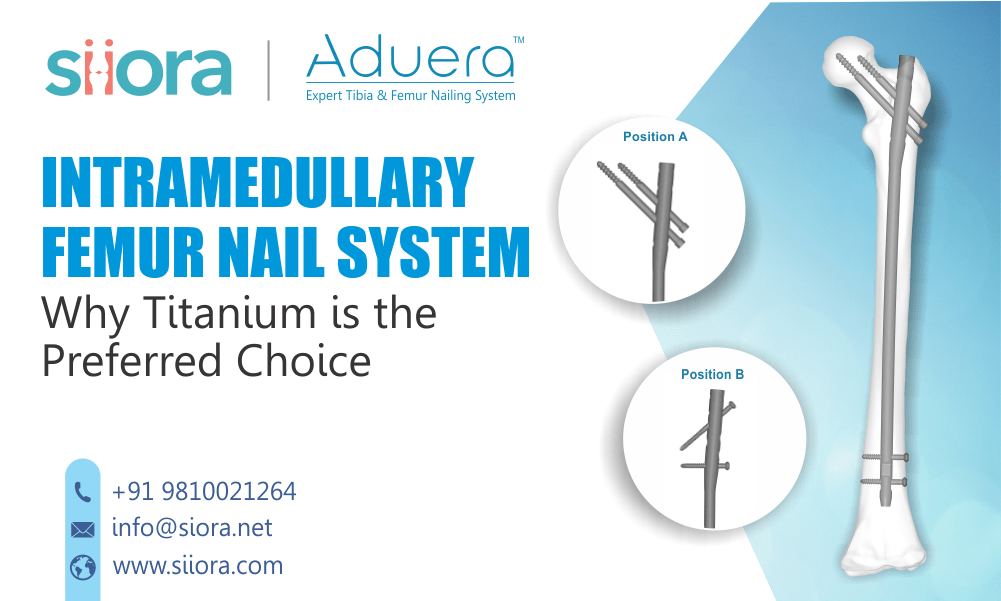
Titanium has become the go-to material for intramedullary nail femursystems, and it’s easy to see why when you’re dealing with serious thigh bone breaks. These nails slide right into the marrow canal of the femur to hold fractures steady, letting patients get back on their feet faster after trauma from falls, crashes, or sports. Surgeons pick titanium over steel or other options because it just works better in the body’s tough environment, blending strength with real-world practicality.
Unmatched Body Compatibility
What makes titanium special is how it plays nice with human tissue—no big inflammatory reactions or allergies cropping up down the line. It quickly forms a thin oxide layer that shields it from corrosion, even in bloody, sweaty surgical sites. This means fewer infections and less hassle for patients who might already be fighting pain or limited mobility, keeping healing on track without extra complications.
Strength That Matches Real Life
These nails boast a Young’s modulus close to natural bone, so they flex just right under walking or impact loads without snapping or stressing the bone too much. That fatigue resistance shines in active folks, like motorbike riders hitting long hauls or laborers back at work. Unlike stiffer metals, titanium avoids the “stress shielding” trap where bone weakens around rigid implants, promoting solid, natural remodeling over months.
Quicker, Gentler Surgeries
Slipping a titanium nail in means smaller cuts and less muscle stripping compared to plates or external fixes—think less blood loss, often under 20ml in kids’ cases, and ops wrapping up in under 70 minutes. The elastic bend helps it hug the femur’s curve perfectly, stabilizing tricky comminuted fractures without open reductions every time. Patients start weight-bearing early, cutting hospital time and rehab costs big time.
Crystal Clear Imaging Follow-Ups
One underrated perk? Titanium barely shows up on X-rays, CTs, or MRIs, so docs get sharp views of healing without distortion. This matters for monitoring union in high-risk spots like near the hip or knee, or in cancer patients with metastatic femur issues. No need to yank hardware early just to see inside, which keeps things simple and safe long-term.
Speedy Recovery and Everyday Wins
Studies show these systems push union rates over 95%, with kids walking soon after and adults ditching crutches in weeks. The elasticity sparks abundant callus formation, perfect for unstable breaks, and lowers risks like growth plate damage in younger patients. For adults, it means less pain post-op, fewer re-dos, and getting back to motorcycles or travel without bulky scars or hardware woes.
Cost-Smart Over Time
Upfront, titanium might nudge the budget, but shorter stays, minimal blood work, and rare removals make it a steal. Local manufacturing ramps this up, matching quality without import hassles. Compared to casts or rigid nails, titanium-made orthopedic implants trim non-union odds and boost function—patients chew through rehab faster, hitting full stride in 8-12 weeks typically.
Why Not the Rest?
Steel feels heavier, sparks more imaging glitches, and pulls infections twice as often. Flexible options lack titanium’s durability for adult loads, while resorbables can’t hack major trauma. Titanium nails hit that sweet spot: tough yet forgiving, letting bones heal as nature intended.
Bottom line, the intramedullary femur nail system thrives with titanium at its core—reliable, patient-focused engineering that turns fractures into footnotes. It’s the smart call for lasting mobility and fewer headaches.
 Ortho Implants Company