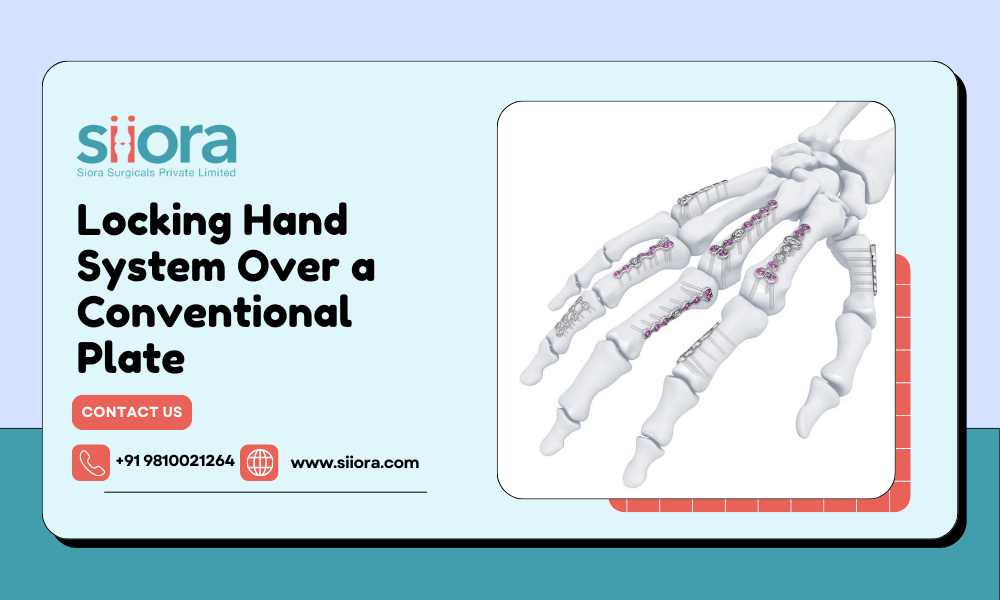
When it comes to orthopedic surgeries, especially those involving the hand, precision, stability, and recovery outcomes are everything. Whether you’re a surgeon or a patient exploring surgical options, understanding the tools and techniques used in fracture fixation can make all the difference. Among the many advancements in orthopedic hardware, the locking hand plate system has emerged as a game-changer, gradually outshining the traditional conventional plate method. But why exactly is this newer system becoming the go-to choice? Let’s break it down.
Understanding the Basics
To appreciate the benefits of a hand locking system, it’s essential to know how it differs from a conventional plate.
A conventional plate relies on the compression between the plate and the bone. The screws grip the bone and pull the plate against it, relying on bone quality to keep the structure intact. This means that any instability in the bone, like osteoporosis or fragmentation, can compromise the whole setup.
On the other hand, a locking hand system doesn’t depend on bone-plate compression. Instead, it uses locking screws that thread into the plate itself, forming a rigid, fixed-angle construct.
Improved Stability, Even in Weak Bone
One of the most significant advantages of the locking hand system is its performance in compromised bone. For patients with brittle or osteoporotic bones, common in elderly individuals, conventional plates can fail because the screws may not hold properly in soft bone. Since the locking system doesn’t rely on screw purchase in the bone alone, it offers a more secure hold.
This means fewer complications, reduced risk of implant failure, and potentially a smoother recovery.
Better Alignment and Less Risk of Screw Loosening
Locking plates maintain anatomical alignment more effectively, especially in complex or comminuted fractures. Once the locking screws are secured into the plate, they stay put. There’s minimal risk of screws backing out or loosening over time, a problem that can occur with traditional plates, especially if the bone shifts or resorbs during healing.
The result? Fewer follow-up surgeries and better long-term outcomes.
Reduced Damage to Blood Supply
One aspect often overlooked in surgical hardware is its impact on the surrounding tissue. Conventional plates need to be tightly compressed against the bone, which can disturb the periosteum, a critical layer that supplies blood to the bone. This disruption can impair healing and increase the risk of infection or delayed union.
Locking hand systems, however, act more like internal fixators. Since they don’t need to press tightly against the bone, they preserve more of the natural blood flow, promoting better biological healing.
Enhanced Surgical Flexibility
From a surgeon’s perspective, locking plates offer more versatility. They’re particularly helpful in anatomically complex areas like the hand, where space is limited and fractures can be tricky. Many modern locking systems are pre-contoured and modular, allowing for easier adaptation to the patient’s unique anatomy.
They also simplify fixation in multi-fragmented fractures, reducing surgical time and increasing confidence in the construct’s durability.
Not Just for the Elderly
While locking hand systems shine in osteoporotic bones, they’re not limited to elderly patients. Athletes, trauma patients, and anyone with a complex hand fracture can benefit from the added strength and precision. In fact, for high-demand patients who need rapid, reliable healing, a locking system often makes more sense.
Conclusion
Choosing a locking hand system over a conventional plate isn’t just about using the latest technology; it’s about better outcomes, fewer complications, and smarter healing. While traditional plates still have their place, the locking hand system offers clear advantages in terms of stability, biology, and surgical efficiency.
To get an international standard range of trauma implants or become a distributor of orthopedic implants in Argentina, contact Siora Surgicals Pvt. Ltd.
 Ortho Implants Company